

The end of the school year can scatter schedules fast. Students leave campus. Families shift into summer routines. Youth-serving programs plan camps, workshops, service days, and community activities.
That is exactly why a simple checklist helps.
Cougs 4 Kids (C4K), a Believe in Me program, gives WSU students, alumni, fans, donors, sponsors, volunteers, and community supporters a practical way to turn Cougar pride into youth-centered service.
“Cougs 4 Kids asks each of us to bring Cougar pride off the sidelines and into service.”
— Julie Wukelic, MBA, CEO, Believe in Me
What is a summer service checklist?
A summer service checklist is a simple planning tool that helps Cougs choose safe, realistic, and community-centered ways to support young people during the summer months.
Download the Summer Service Checklist
Before summer calendars fill up, download the printable Cougs 4 Kids Summer Service Checklist and choose one realistic way to serve.
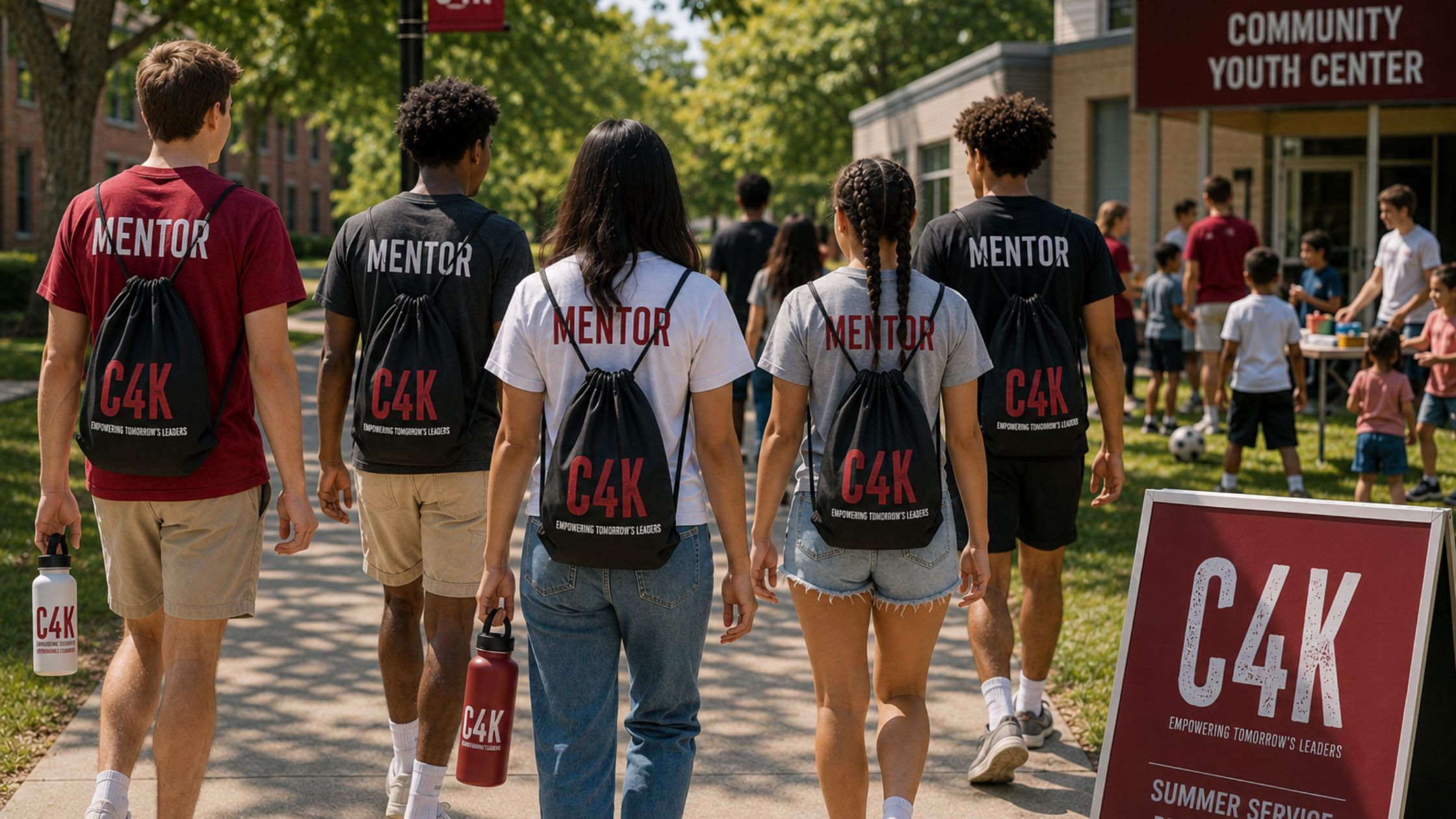
Summer service gives Cougs a practical way to carry campus pride into community care.
Why Summer Service Matters
Summer can be full of possibility: more daylight, more flexible schedules, more time for service projects, outdoor activities, leadership practice, and community connection.
It can also be a season when young people have fewer structured opportunities, fewer familiar routines, or fewer chances to connect with trusted adults outside of school.
That does not mean one mentor, one workshop, or one project can solve every barrier. It cannot. But thoughtful summer service can create meaningful touchpoints: a conversation, a project, a leadership activity, a moment of encouragement, or a reminder that a young person is seen and valued.
Research from RAND’s National Summer Learning Project found that attendance, program quality, and time on task matter in voluntary summer learning programs. The practical takeaway for Cougs is simple: summer service should be planned with care, consistency, and respect.
What Makes Service Meaningful for Young People?
Good service is not just about showing up. It is about showing up in a way that respects young people’s strengths, choices, privacy, and voice.
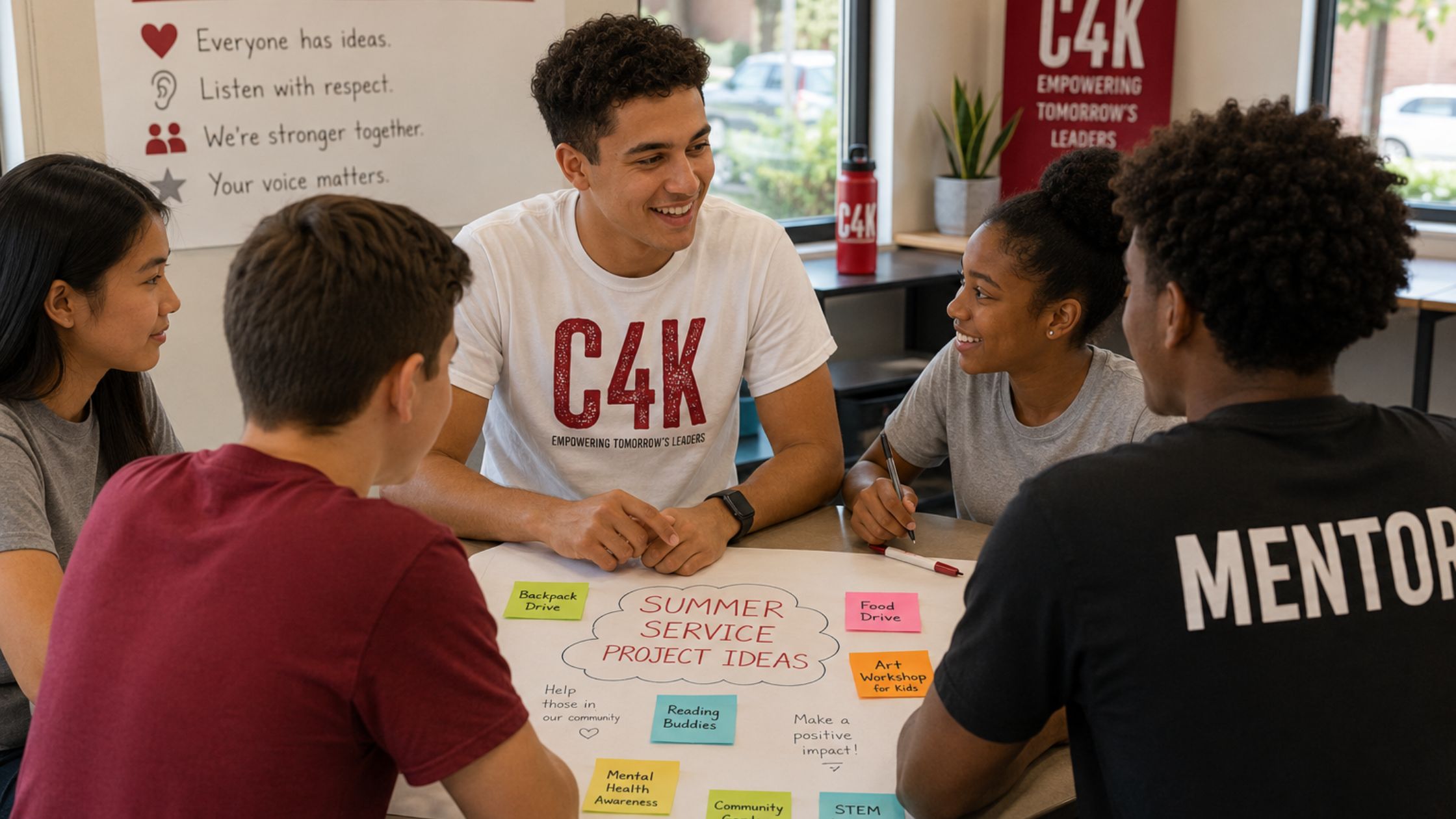
Meaningful service starts with listening, respect, and young people having room to contribute.
The Search Institute Developmental Relationships Framework identifies relationship-building practices that help young people grow, including expressing care, providing support, sharing power, and expanding possibilities. Those ideas fit the heart of Cougs 4 Kids: listen first, invite young people to contribute, and make support feel personal rather than performative.
The National Academies report The Promise of Adolescence describes adolescence as a period of opportunity for learning, relationships with peers and adults, and identity development. That is one reason summer service should be built around dignity, belonging, and real connection.
Bring Cougar Pride Into Service This Summer
Cougs 4 Kids is built around a simple belief:
Every young person should have a Coug in their corner.
That Coug might be a WSU student who volunteers, an alum who makes an introduction, a fan who shares the opportunity, a business that sponsors supplies, a donor who gives, or a community supporter who helps open a door.
Cougar pride becomes especially meaningful when it moves from “I care” to “Here is one useful thing I can do.”
The Cougs 4 Kids Summer Service Checklist
Use this checklist as a starting point. Choose what fits your schedule, skills, and role. For a printable version, download the Cougs 4 Kids Summer Service Checklist PDF and keep it nearby as you plan.
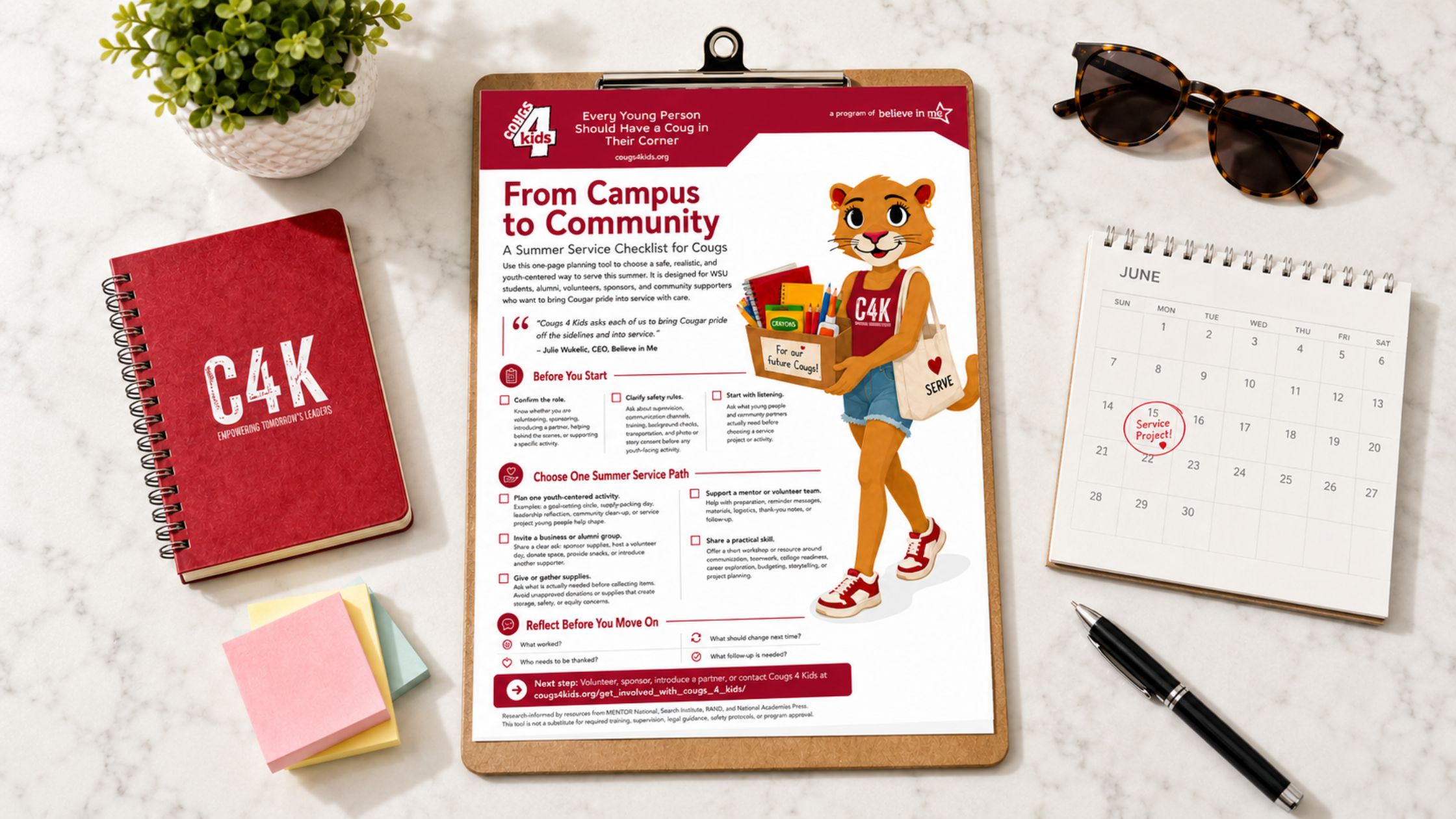
Use the downloadable checklist to choose one realistic role before summer calendars fill up.
1. Choose a realistic service role
Start with what you can actually follow through on.
- Help plan a youth-centered activity.
- Support a community service project.
- Assist with logistics, outreach, or materials.
- Help a volunteer team prepare.
- Share a practical skill behind the scenes.
- Invite a business, alumni group, or community supporter to learn more.
Cougs 4 Kids offers volunteer opportunities for people who want to support youth mentorship, leadership, outreach, events, and program growth. Learn more about how to volunteer with Cougs 4 Kids.
The strongest role is not always the biggest one. It is the one you can do thoughtfully.
2. Start with listening
Before planning an activity, ask better questions.
- What do young people already care about?
- What community strengths can this activity build on?
- What support would make participation easier?
- What would help young people feel respected and included?
- Who else should be part of the conversation?
Listening keeps service grounded. It also reflects the Search Institute’s emphasis on relationships that include respect, collaboration, and young people having a say.
3. Plan one youth-centered activity
A summer activity does not need to be complicated.
- A goal-setting conversation.
- A community clean-up shaped by young people.
- A leadership reflection circle.
- A “what I wish I knew earlier” panel.
- A thank-you note project for community helpers.
- A supply-packing day for mentoring or workshop materials.
- A service project where young people help choose the focus.
The key is youth agency. Young people should not only receive support; they should have room to contribute.
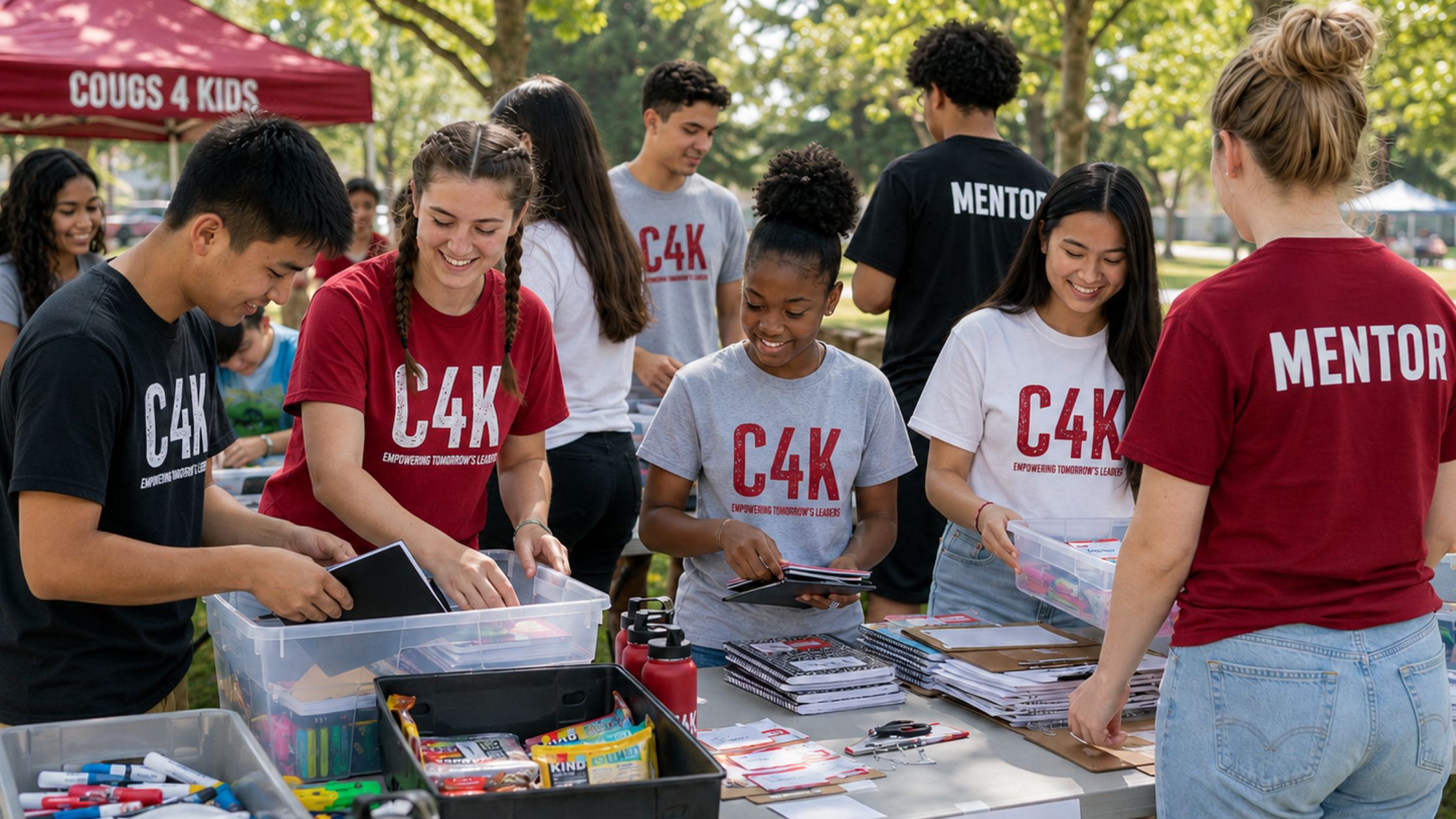
Supplies, logistics, and behind-the-scenes help can make youth-centered activities easier to deliver.
4. Keep safety and boundaries clear
Good intentions work best when they are paired with clear expectations.
- What role they are playing.
- Who is coordinating the activity.
- What communication channels should be used.
- What privacy expectations apply.
- How young people’s names, photos, and stories are protected.
- What to do if a concern comes up.
MENTOR’s Elements of Effective Practice for Mentoring emphasizes that quality mentoring is structured, intentional, inclusive, and safe. MENTOR also notes that mentoring done haphazardly can be harmful, which is why preparation matters.
A mentor or volunteer does not need to have every answer. A strong supporter listens, encourages, respects boundaries, and helps a young person identify a good next step.
5. Make belonging visible
Belonging is built through small signals repeated over time.
- Being greeted with warmth.
- Having their identity respected.
- Seeing their culture treated with dignity.
- Being invited to lead part of a project.
- Hearing, “Your question matters.”
- Knowing they can participate without having to share personal hardship.
Belonging is not a bonus. It is part of how young people experience support.
6. Invite alumni, fans, and businesses to help
Not every Coug can volunteer directly. That is okay.
- Sponsor a youth leadership activity.
- Donate supplies for a workshop or service project.
- Introduce a local business that cares about youth opportunity.
- Share the volunteer page with a WSU alumni group.
- Help recruit skilled volunteers.
- Provide space, snacks, printing, or visibility when helpful.
Businesses and community supporters can explore Cougs 4 Kids sponsorship opportunities or contact Cougs 4 Kids to start a conversation.
7. Reflect before you move on
A service project is not finished when the activity ends.
- What worked?
- What felt unclear?
- What should change next time?
- Who needs to be thanked?
- What follow-up is needed?
- Did this activity help young people feel respected, included, and supported?
Reflection helps turn a one-time service moment into a stronger next step.
Quick Comparison: Ways Cougs Can Serve This Summer
Volunteer
Best fit for: WSU students, alumni, skilled volunteers, and community members
What it can support: Planning, logistics, outreach, materials, mentoring preparation, and encouragement
VolunteerSponsor
Best fit for: Businesses, CSR leaders, and alumni-owned companies
What it can support: Supplies, activities, outreach, and community engagement
Explore SponsorshipsDonate
Best fit for: Alumni, fans, families, and supporters
What it can support: Program needs, materials, outreach, and youth-centered activities
Get InvolvedConnect
Best fit for: Fans, alumni groups, civic groups, and community connectors
What it can support: Warm introductions, visibility, local insight, and relationship-building
Start a ConversationHow Donors, Sponsors, and Community Supporters Can Help
Cougs 4 Kids is powered by people who care enough to take a practical next step.
For donors and sponsors, the best question is not, “How big does my gift need to be?”
A better question is:
What kind of support would help young people experience encouragement, belonging, leadership practice, or community connection this summer?
Examples might include workshop materials, mentor preparation resources, youth-centered project supplies, outreach support, or event logistics.
Supporters who want to understand how Cougs 4 Kids stewards community support can visit the transparency and accountability page.
Gratitude for the Coug Community
Cougs 4 Kids is built on a generous idea: Cougar pride can become community care.
Thank you to every WSU student, alum, fan, donor, sponsor, volunteer, business owner, family member, and community supporter willing to ask, “How can I be useful?”
That question matters. It moves the work away from attention and toward trust.
Key Takeaways
- Summer service works best when it is realistic, respectful, and planned with care.
- Cougs can support young people through volunteering, sponsorship, donations, introductions, and community connection.
- Mentoring and service should respect youth voice, privacy, boundaries, and dignity.
- A small, consistent act of service can be more useful than a big promise.
- The printable Summer Service Checklist PDF can help you choose one thoughtful next step.
Bottom Line
A summer service checklist is not about doing everything. It is about choosing one thoughtful way to show up for young people with care, consistency, and respect.
This summer, Cougar pride can become more than something we wear. It can become something we practice.

When more people show up, the next step can feel less like a solo climb and more like a shared trail forward.
Take One Step Today
Download the checklist, choose one realistic service path, and invite one more person to do the same.
PS: Before summer gets busy, pick one role, make one introduction, share one opportunity, or start one conversation that helps young people feel supported.
Frequently Asked Questions
What is the Cougs 4 Kids Summer Service Checklist?
The Cougs 4 Kids Summer Service Checklist is a printable planning tool that helps WSU students, alumni, fans, donors, sponsors, volunteers, and community supporters choose one practical way to serve young people during the summer. Download the checklist here.
Why does summer service matter for young people?
Summer can bring more flexibility, but it can also mean fewer structured opportunities and fewer regular touchpoints with supportive adults. RAND’s research on voluntary summer learning programs shows that quality, attendance, and time on task matter, which is a useful reminder to plan summer activities thoughtfully.
How can WSU students serve through Cougs 4 Kids?
WSU students can support young people by helping with youth-centered activities, service projects, mentoring preparation, logistics, outreach, materials, or volunteer support. The best place to start is the Cougs 4 Kids volunteer page.
How can alumni and Cougar fans support Cougs 4 Kids?
Alumni and fans can volunteer, donate, sponsor, introduce a business, share the checklist, or connect Cougs 4 Kids with community supporters who care about young people. A simple introduction can be a meaningful contribution.
What makes a good youth-centered service project?
A good youth-centered service project is simple, respectful, and shaped with young people in mind. It gives young people room to contribute ideas, make choices, practice leadership, and feel included. The Search Institute Developmental Relationships Framework is a helpful research-based resource because it emphasizes care, support, shared power, and expanding possibilities.
What should volunteers keep in mind before serving young people?
Volunteers should understand their role, follow the activity plan, protect young people’s privacy, use appropriate communication channels, and ask questions when something is unclear. MENTOR’s Elements of Effective Practice for Mentoring emphasizes that mentoring should be structured, safe, inclusive, and grounded in quality practices.
Can businesses sponsor Cougs 4 Kids?
Yes. Businesses, alumni-owned companies, and community supporters can explore Cougs 4 Kids sponsorship opportunities to support youth-centered activities, outreach, materials, and community engagement.
Is Cougs 4 Kids only for current WSU students?
No. WSU students are an important part of the Cougs 4 Kids community, but alumni, fans, donors, sponsors, volunteers, families, and community supporters can all help. A Coug in a young person’s corner can be a mentor, donor, sponsor, volunteer, business owner, fan, or friend of the mission.
How does service support adolescent development?
The National Academies report The Promise of Adolescence describes adolescence as a period of opportunity for learning, relationships, and identity development. That is why youth-centered service should create respectful opportunities for connection, leadership practice, and belonging.
Where should someone start?
Start by downloading the Cougs 4 Kids Summer Service Checklist PDF. Then choose one next step: volunteer, sponsor, introduce a community supporter, share the article, or contact Cougs 4 Kids to ask what support would be most useful.
