

Summer can feel full before it even starts. Work, classes, internships, family plans, travel, and a few needed days off all compete for space.
That is why Cougs 4 Kids (C4K), a Believe in Me program, is building volunteer pathways that let WSU students support young people in realistic, structured ways. You do not need an empty calendar to be useful. You need a clear role, good boundaries, training, and a willingness to show up with care.
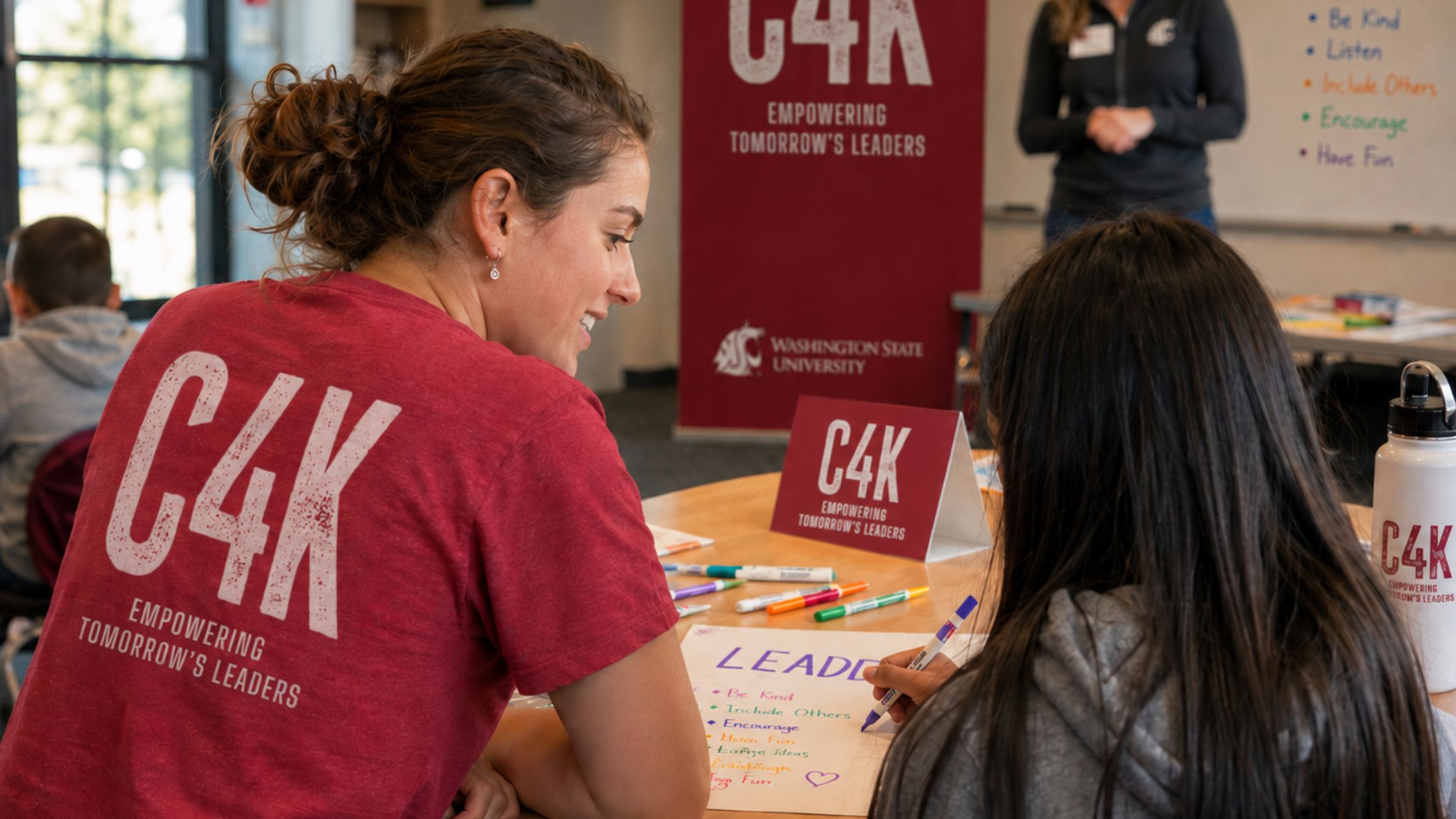
A C4K mentor supports a youth leadership activity with a young person.
Key takeaways
- WSU students can serve young people without committing to a schedule they cannot keep.
- Good mentorship starts with role clarity, training, supervision, and respectful boundaries.
- Flexible options can include one-time event support, kit preparation, short conversation series, group activities, or behind-the-scenes planning.
- Donors, alumni, sponsors, and local businesses help create the structure that makes student service possible.
Ready to explore a flexible mentor role?
Visit student mentoring with Cougs 4 Kids to express interest. Sponsors, alumni supporters, and community partners can contact Cougs 4 Kids to help make student mentoring possible.
Why summer is a good entry point for busy Cougs
Summer changes the rhythm of campus life. Some students stay in Pullman. Some go home. Some take classes. Some work. Some are only available for a few hours at a time.
That flexibility can be a strength when the role is designed well.

Check-in and welcome roles give WSU students a clear, practical way to serve at C4K events.
The WSU Center for Civic Engagement notes that some CCE-facilitated service projects take 2-4 hours and are designed for students with busy schedules. WSU Student Affairs community service resources also point students toward volunteer opportunities that fit their schedules and interests. Cougs 4 Kids can learn from that same practical truth: students are more likely to serve well when the commitment is clear, manageable, and matched to real life.
For young people, summer can also bring a gap in routine, encouragement, and access to trusted support. A steady adult or near-peer connection does not need to be complicated to matter. It can look like listening well, helping with a project, writing an encouraging note, showing up at a day camp, or helping a young person imagine a next step.
MENTOR's youth mentoring talking points report that 1 in 3 young people in the United States reach age 19 without a mentor of any kind. That does not mean every student volunteer must become a long-term mentor right away. It does mean there is real value in building more careful, well-supported pathways for connection.
What not overcommitting actually means
Not overcommitting does not mean caring less. It means being honest early.
A young person benefits from consistency. A mentor benefits from clarity. A program benefits from knowing who can do what, when, and for how long.
Before you say yes, ask yourself:
- How many hours can I truly give this month?
- Do I need a one-time role, a short series, or an ongoing role?
- Am I comfortable working directly with young people, or would behind-the-scenes support be a better first step?
- Can I attend orientation or training before serving?
- What dates are already off-limits because of work, class, travel, or family commitments?
That kind of honesty helps C4K place students in roles where they can serve well without burning out.
Flexible ways WSU students can serve this summer
-
One-time event support
What it can look like: Help with check-in, welcome activities, setup, cleanup, or activity stations.
Best fit: Students with limited or unpredictable summer time.
A few hours on a specific date
-
MentorBoost Kit support
What it can look like: Assemble kits, write encouragement notes, organize supplies, or help prepare materials.
Best fit: Students who want a tangible support role before direct mentoring.
One-time or small-group work sessions
-
Short mentor conversation series
What it can look like: Join a guided conversation or activity series with clear prompts and supervision.
Best fit: Students who can commit to a limited number of sessions.
Weekly or biweekly for a defined period
-
Group activity support
What it can look like: Help guide team-building, leadership, or youth-led project activities.
Best fit: Students who like group settings and activity-based service.
Event-based or short series
-
Planning and resource support
What it can look like: Help prepare materials, outreach lists, activity guides, or volunteer communications.
Best fit: Students who prefer behind-the-scenes work.
Flexible, often remote or project-based
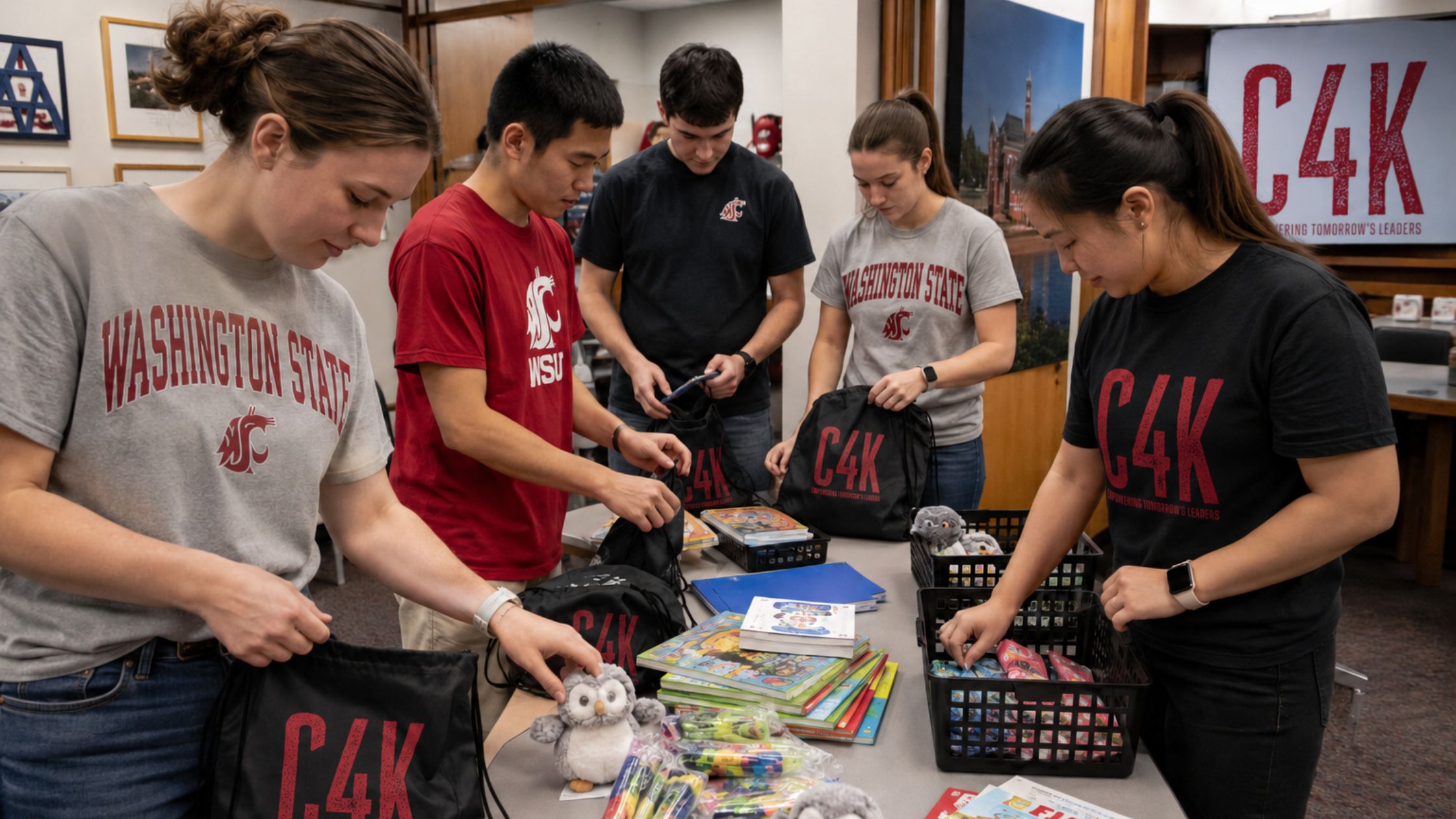
WSU students prepare MentorBoost Kits with supplies, activities, and encouragement for young people.
The key is not to choose the most impressive role. The key is to choose the role you can keep.
What WSU students can do through Cougs 4 Kids
As a program of Believe in Me, Cougs 4 Kids is designed to bring WSU students and community supporters together around encouragement, leadership practice, and practical support for young people. The C4K student mentoring page describes opportunities for WSU students to build leadership skills, support activities, and help young people practice confidence, teamwork, and problem-solving.
A summer C4K student role may include:
- Welcoming young people at a C4K activity or event.
- Helping with leadership games, reflection prompts, or small-group conversations.
- Writing notes of encouragement for MentorBoost Kits.
- Supporting a youth-led project with setup, supplies, or encouragement.
- Sharing a personal story about asking for help, staying motivated, or trying again after a setback.
- Helping younger students see that college, career, and leadership pathways are made of many small steps.
A C4K mentor is not a counselor, parent, teacher, legal advisor, financial aid expert, or crisis responder. Mentors should stay within their role, follow youth safety expectations, and point young people back to trusted adults and official resources when questions need professional support.
That boundary protects young people. It also protects student volunteers.
A simple 5-step path to getting involved
1. Choose your real capacity
Start with your calendar, not your best intentions. Decide whether you can serve once, help behind the scenes, join a short series, or explore a longer mentor role.
2. Submit interest
Use the student mentoring with Cougs 4 Kids page to express interest. Share your availability, preferred role type, and any dates you already know are unavailable.
3. Attend orientation or training
Quality mentoring is not improvised. The National Mentoring Resource Center's Ready to Go: Mentor Training Toolkit identifies training topics such as building mentoring relationships, setting boundaries, communication, youth development, and cultural competency. Students should expect role-specific guidance before beginning any youth-facing activity.
4. Serve within the role you accepted
Show up on time. Follow the activity plan. Ask questions when you are unsure. Respect privacy. Avoid making promises you cannot keep. Let the C4K contact know quickly if your schedule changes.
5. Reflect and decide what comes next
After the role, take five minutes to reflect. What felt natural? What felt hard? Would you serve again? Would you rather support events, kits, planning, or direct mentoring next time?
Mentorship grows stronger when volunteers are honest about what they can do next.
Why this matters to young people
Young people do not need volunteers to arrive with perfect answers. They need caring people who are prepared, respectful, and willing to listen.
The National Institute of Justice describes mentoring programs as a way to provide young people with structured support from older or more experienced people, including adult volunteers or students at higher grade levels. That word "structured" matters. Mentoring works best when programs create clear roles, thoughtful training, and safe boundaries.
For C4K, that structure can help young people experience encouragement without being defined by hardship. The goal is not to cast young people as problems to fix. The goal is to build a wider circle of support around students who are already capable, curious, and growing.
A few hours of service can help a young person feel welcomed at an event. A well-written note can remind a student that someone believes in their next step. A short conversation can help normalize asking questions about college, careers, money, identity, leadership, and belonging.
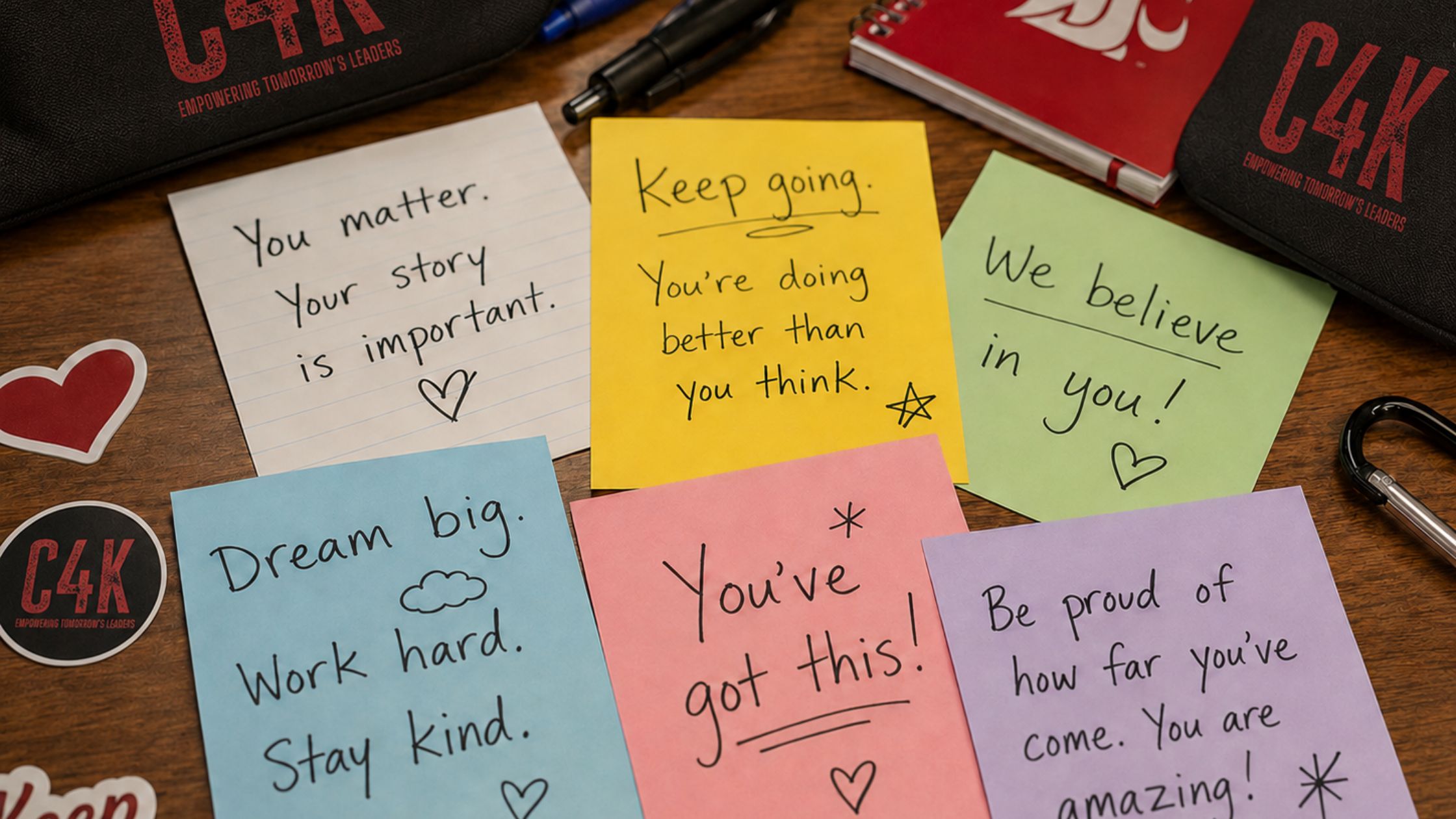
Handwritten encouragement notes add a personal, human touch to MentorBoost Kits.
Those moments are not magic. They are human. And when they are repeated by many caring Cougs, they can become part of a stronger support system.
Why this matters to WSU students
Mentoring is not a one-way gift. It also helps WSU students practice skills they will use long after summer ends.
A student who serves with C4K may practice:
- Listening without taking over.
- Communicating clearly with young people and adults.
- Following youth safety expectations.
- Leading an activity with humility.
- Working with people from different backgrounds.
- Managing a commitment responsibly.
- Telling a personal story in a way that helps someone else.
Those are leadership skills. They are also life skills.
The best mentor is not the student with the most impressive resume. The best mentor is often the one who can be steady, respectful, curious, and honest.
Why donors and sponsors matter to flexible mentorship
Flexible mentorship still needs support behind the scenes.
When students can only give a few hours, someone still needs to organize the role, prepare materials, communicate with families and partners, manage youth safety expectations, train volunteers, and make the experience useful for young people.
That is where donors, sponsors, alumni, and local businesses can help.
Support for C4K can help with practical needs such as:
- Mentor orientation and training materials.
- MentorBoost Kits and encouragement notes.
- Program supplies and activity materials.
- Volunteer coordination.
- Transportation or access-related support tied to confirmed activities.
- Youth leadership activities and community project support.
For a busy student volunteer, that behind-the-scenes support can be the difference between wanting to help and having a clear, safe, useful way to show up.
Supporters who want to help can visit get involved with Cougs 4 Kids, review C4K sponsorship opportunities, or contact Cougs 4 Kids to discuss the best fit.
A note of gratitude
Thank you to the WSU students who are willing to ask, "Where can I be useful?" Thank you to alumni and Cougar fans who keep young people in mind when they give, volunteer, or share a program with someone who should know about it. Thank you to community supporters who understand that mentorship requires both heart and structure.
Every young person should have a Coug in their corner. C4K is one way the Cougar community can help make that belief visible.
FAQ: summer youth mentorship opportunities for WSU students
Quick answers for WSU students, alumni, donors, sponsors, and Washington community supporters considering summer mentorship with Cougs 4 Kids.
What are summer youth mentorship opportunities for WSU students?
Summer youth mentorship opportunities for WSU students are flexible ways for current Cougs to support young people through supervised activities, MentorBoost Kit preparation, leadership practice, encouragement notes, and community projects with Cougs 4 Kids.
Where can WSU students find youth mentorship opportunities in Washington?
WSU students can start with the Cougs 4 Kids student mentoring page. C4K is focused on Washington communities, with natural relevance for Pullman, Spokane, WSU students, alumni, donors, sponsors, and local supporters.
Do I need prior mentorship experience to volunteer with Cougs 4 Kids?
No prior mentorship experience is needed for many entry-level roles. Before youth-facing service, students need clear role expectations, orientation, training, and youth safety guidance; the National Mentoring Resource Center training toolkit is a useful reference for common mentor-preparation topics.
How much time does summer mentoring with Cougs 4 Kids take?
The time commitment depends on the role. Some summer volunteer opportunities may be one-time or event-based, while others may involve a short series or recurring commitment; the best fit starts with honest availability.
Can I volunteer if I have a summer job, class, internship, or family commitments?
Yes, when the role fits your real schedule. C4K works best when WSU students are clear about work, classes, travel, family commitments, and the dates they can reliably serve.
What does a C4K mentor actually do?
A C4K mentor may listen, encourage, support group activities, write MentorBoost Kit notes, help with team-building, or share appropriate personal experiences. A mentor does not replace a counselor, parent, teacher, legal advisor, financial aid expert, or crisis responder.
How does Cougs 4 Kids support safe youth mentorship?
Safe youth mentorship starts with structure: screening when appropriate, training, supervision, role clarity, privacy expectations, and consent procedures. MENTOR's Elements of Effective Practice for Mentoring and the National Mentoring Resource Center offer helpful references for mentoring program design.
Is Cougs 4 Kids part of Believe in Me?
Yes. Cougs 4 Kids is a program of Believe in Me, a 501(c)(3) youth empowerment nonprofit. Donations to Believe in Me are tax-deductible to the extent permitted by law; donors can review IRS charitable contribution deduction guidance for general information.
Does volunteering with C4K mean I officially represent WSU?
No. C4K is WSU-rooted and connected to the Cougar community, but volunteering with C4K does not make a student an official WSU representative unless a separate written arrangement says so. Students looking for official WSU civic engagement resources can also review the WSU Center for Civic Engagement.
Can alumni, donors, sponsors, or businesses support summer mentorship?
Yes. Alumni, donors, sponsors, businesses, and community supporters can help through donations, sponsorship, in-kind support, volunteer engagement, or introductions. Supporters can review C4K sponsorship opportunities or contact Cougs 4 Kids to discuss the best fit.
Bottom line
WSU students do not need unlimited time to be useful this summer. They need a clear, realistic role they can keep.
When Cougs, alumni, donors, sponsors, and community partners work together carefully, C4K can help more young people experience encouragement, connection, and a wider circle of support.
How to take the next step
If you are a WSU student, start by choosing the role that fits your real summer capacity. Then visit student mentoring with Cougs 4 Kids to express interest.
If you are an alum, donor, sponsor, business, or community partner, your support can help create the structure that makes student service possible. Visit get involved with Cougs 4 Kids, explore C4K sponsorship opportunities, or contact Cougs 4 Kids to start the conversation.
PS: Summer service works best when people are honest about what they can do. A few well-planned hours can still be a meaningful contribution.
