

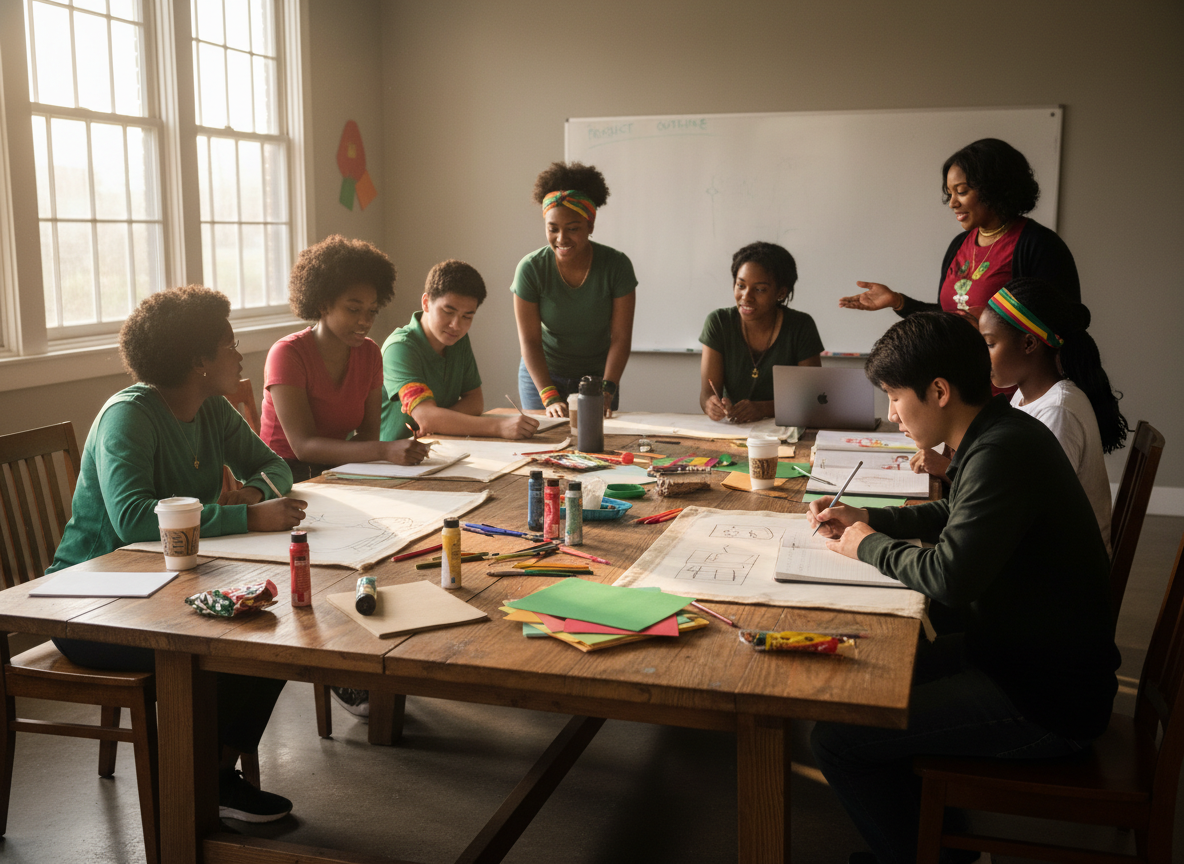
Juneteenth youth leadership begins with learning and listening. Before planning a service project, consult reliable history resources and the people connected to the work. Then help young people choose a thoughtful contribution and reflect on what they learn.
For Cougs 4 Kids, the strongest Juneteenth youth leadership service project ideas are youth-led, mentor-supported, and locally grounded. They connect learning with contribution. They make room for reflection. Most importantly, they help young people practice leadership without turning a sacred history into a performance.
Juneteenth youth leadership starts with learning
A good Juneteenth youth leadership project follows three steps: learn the history, listen to community voices, and choose a practical act of service. The National Museum of African American History and Culture explains Juneteenth as the legacy of June 19, 1865, when freedom was announced to enslaved people in Galveston, Texas, after the Emancipation Proclamation.
That history deserves more than a calendar mention. It asks mentors and youth to think about delayed freedom, resilience, opportunity, and the unfinished work of making promises real. Service becomes stronger when students understand why the day matters before deciding what to do.
Start with local learning
Invite youth to research Black history in their own city, school district, county, or region. They can create a reading list, interview a local historian, map community assets, or visit a public exhibit. The point is not to make students memorize dates. It is to help them see that history lives close to home.
Mentors can support this by bringing reliable sources, asking open questions, and resisting the urge to lecture for the whole session. Youth leadership grows when students investigate, discuss, and decide what they want to understand next.
Listen before choosing a project
Before launching a drive or event, ask community partners what would help. A library, youth center, school, cultural organization, or mutual aid group may already know the gaps. Listening protects young leaders from guessing. It also teaches a core leadership skill: communities are not problems to fix from the outside.
Youth.gov describes positive youth development as an approach that recognizes young people’s strengths and provides opportunities, relationships, and support. Listening fits that model because it treats youth as contributors who can learn from the community and serve with care.
Juneteenth youth leadership through thoughtful service
Possible Juneteenth service projects include a community resource table, a youth-made history display, thank-you cards for local Black educators and leaders, a book drive featuring Black authors, care kits for families, a neighborhood cleanup connected to a community event, or an oral-history listening project with clear consent and privacy rules.
The best choice is not necessarily the biggest. It is the one youth can help plan, explain, and complete. Ask: Who benefits? Who was consulted? What will youth lead? What will mentors handle? How will we avoid making the project about us?
Make mentors guides, not owners
Adults and college mentors should create safety, structure, and encouragement while leaving real decisions to young people. That can mean offering three project options, helping youth build a timeline, coaching a student facilitator, or handling logistics that should not fall on teens.
The approved quote we use often applies here too: “Students should not have to already know the system to find their next step.” In service learning, mentors can make the process visible without taking the project away. That balance helps youth experience leadership as something they practice, not something adults pretend to give them.
Build reflection into the project
Reflection turns service into leadership development. After the project, ask youth what they learned about Juneteenth, what community strength looked like, what surprised them, and what they would change next time. These questions matter as much as the photos, supplies, or attendance count.
You can also ask students to name one leadership skill they practiced: listening, planning, speaking, organizing, asking for help, managing conflict, or finishing a task. This helps young people connect civic action to future confidence.
Plan a careful Juneteenth youth leadership timeline
A respectful Juneteenth project should not be assembled at the last minute. Give youth time to learn, ask questions, choose a role, and understand the purpose. A simple timeline might include one session for history, one for community listening, one for project planning, one for service, and one for reflection.
This timeline helps mentors avoid rushing students into visible tasks before they have context. It also gives community partners time to respond, suggest adjustments, and protect cultural details that outsiders may miss. Planning is not bureaucracy here; it is part of honoring the day.
Know what to avoid
Avoid projects that ask Black students or staff to educate everyone else without support. Do not use Juneteenth symbols as decoration without explanation. Avoid centering photos of volunteers over community voices. Choose language that acknowledges ongoing barriers, rather than treating freedom as complete when history and lived experience show that opportunity has never been distributed evenly.
Instead, choose language and activities that recognize resilience, truth, and responsibility. Youth can celebrate, serve, and create, but they should also be invited to think critically about what freedom requires in schools, neighborhoods, health, safety, and opportunity today.
Measure dignity, not just output
It is fine to count books collected, kits packed, cards delivered, or volunteers involved. However, youth-serving programs should also ask whether the work was respectful. Did community partners feel heard? Did youth understand the purpose? Were cultural details handled with care? Did the project strengthen relationships?
A Juneteenth service project should leave people feeling honored, not used. That standard keeps the work grounded in community strength instead of performative activity.
Keep Juneteenth youth leadership going after the holiday
A single day can spark a longer commitment. Youth might turn a history display into a monthly learning board, continue a partnership with a community organization, invite speakers, mentor younger students, or choose another service project connected to belonging and opportunity.
Cougs 4 Kids can help WSU-connected mentors, donors, volunteers, and partners support youth leadership beyond one event. Learn how Cougs 4 Kids works, then choose a next step: donate, volunteer, mentor, or invite a Coug-connected partner to get involved.
FAQ: Juneteenth youth leadership projects
Should youth projects include celebration?
Yes, when celebration is paired with learning and respect. Food, music, art, and gathering can be meaningful, but they should not replace historical context or local listening.
How can mentors avoid tokenizing Juneteenth?
Use credible sources, involve community voices, avoid centering the volunteer group, and choose service that has a clear benefit beyond visibility.
Let youth name the lasting lesson
At the end, invite youth to complete one sentence: “Because of this project, I understand…” Their answers may mention history, freedom, teamwork, courage, unfairness, pride, or a new community connection. Those reflections show what the project actually taught, beyond what adults hoped it would teach.
Then ask one more question: “What should we do next?” If youth can name a next step, the Juneteenth project has moved from a one-day activity into leadership practice. That is where community strength becomes something young people can carry forward.
That next step can be small, but it should be specific enough that youth can recognize their own leadership in it.
Ready to take the next step?
Use this guide as a starting point, then choose one concrete way to support youth with care and consistency.
