

A design challenge gives teens a small problem to solve, a few materials, and a chance to test an idea. For Black History Month, begin with a verified story about a Black inventor. Then let teens build a paper model, try it, and change one thing.
This Cougs 4 Kids guide is for Washington State University (WSU) student mentors and teen activity leaders. It pairs history with a low-cost indoor project. The goal is to learn from an inventor’s work while making room for young people’s own ideas.

Begin the design challenge with a real inventor story
First, choose one of the two stories below. Read a short section together and keep the source link with your notes. Ask: What problem did this person work on? What did they add or improve?
Lewis Latimer: The National Inventors Hall of Fame credits Latimer with a method for making a more durable carbon filament for electric light bulbs. A filament is the part that glows inside that type of bulb. His work improved lighting; he did not invent the light bulb itself.
Garrett Morgan: The Federal Highway Administration’s history describes his three-position traffic signal, patented in 1923. It included a way to stop traffic in all directions before travel resumed. This was an improvement to traffic control, not the invention of all traffic signals.
Then ask teens which detail caught their interest. They can speak, write, sketch, or simply listen.
Give the history more than a name and a date
Next, look beyond a one-line invention list. For example, the Smithsonian’s Lewis Latimer profile describes his skills in drawing, his writing, and his teaching. It also shows a patent drawing for a book supporter.
Black inventors created useful things while facing unfair barriers. The Smithsonian’s research on Black innovation explains how racism affected access to money, patents, and recognition. A short activity cannot tell that whole history, but it can leave room for questions.
Do not ask Black teens to speak for all Black people or teach the group about racism. Instead, offer the same choices to everyone. Also make clear that learning about Black inventors belongs throughout the year.
Set a small goal for the design challenge
Now invite teens to solve a simple problem: make a stand that holds an index card where someone can see it. A card might show a game rule, a group name, or an activity choice.
This is a new practice task, not a copy of Latimer’s or Morgan’s invention. It uses a related habit: notice a need and look for a useful improvement.
Ask teens to choose who the stand is for and what would help that person. For example, one team may want a steady base. Another may want a stand that folds flat for storage.
Then agree on one test. Try keeping the same card upright on a table for ten seconds. Treat that as a starting point, not a test of anyone’s worth or talent.
Gather simple supplies and offer ways to take part
For each pair or small group, set out:
- Two sheets of scrap paper.
- A small piece of clean, thin cardboard.
- One index card or a similar paper rectangle.
- A short piece of tape.
- A pencil and ruler, if useful.
Use folds or pre-cut pieces so the task does not need sharp tools. Ask the program leader to approve materials and the space. Keep this project on the table; it needs no heat, electricity, or road testing.
Also offer different roles. A teen can describe an idea, draw, fold, time a test, or record what happened. Ask before helping with someone’s model. Our activity access checklist can help you plan choices that work for the group.
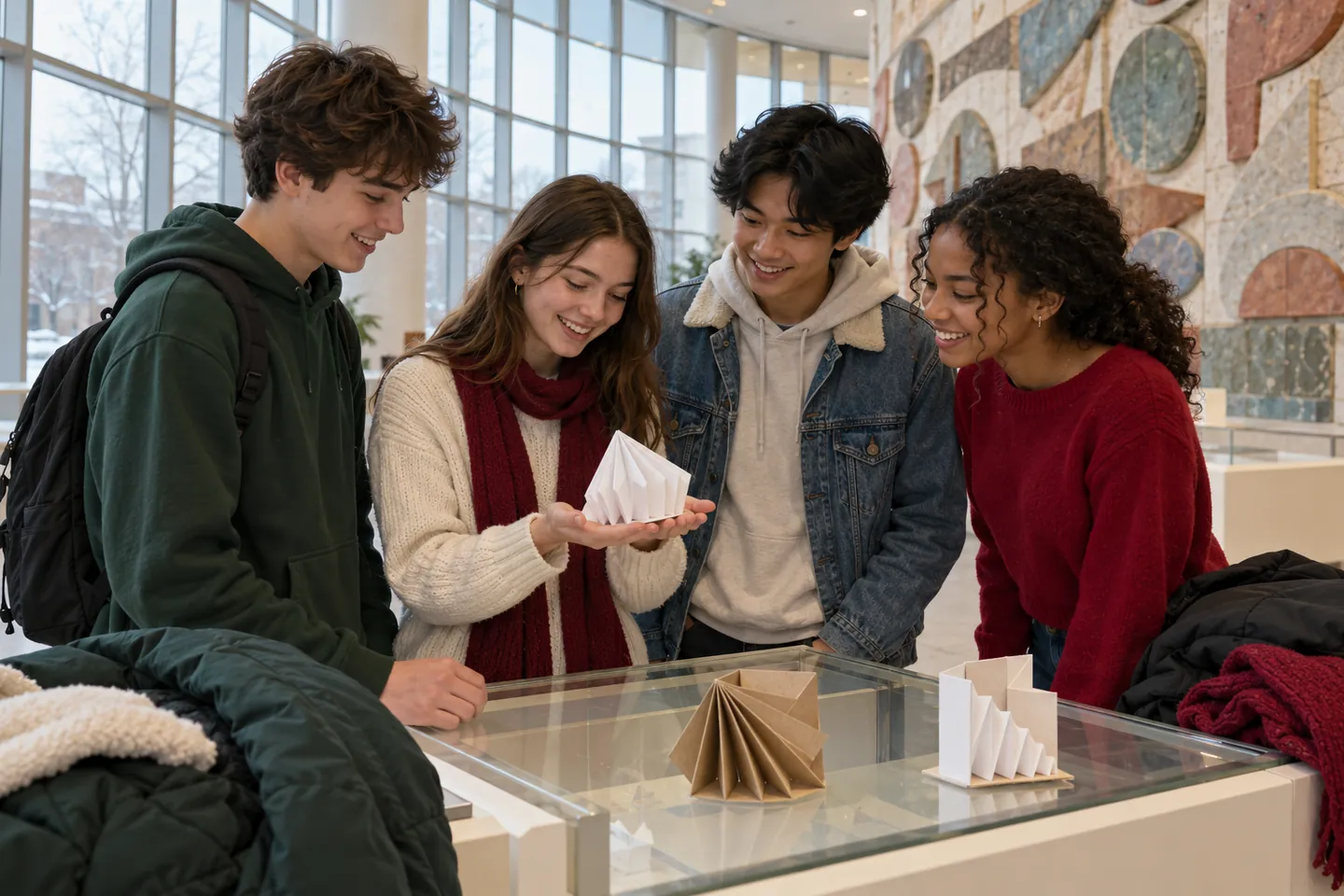
Build, test, and change the paper model
A prototype is an early model used to try an idea. It does not need to look polished. Start with these steps:
- Sketch: Draw two possible shapes, such as a tent fold or an accordion fold.
- Choose: Let the teen or team pick one idea to try.
- Build: Fold the paper and add a base if needed.
- Test: Place the same index card on the stand and time it.
- Notice: Write or say what stayed steady and what slipped.
- Change: Adjust one feature, then run the same test again.
For instance, a narrow stand may tip over. The team could widen its base and try again. Keep the card and table the same so the comparison is easier to understand.
If a model falls, describe what happened without blame. “The card slid forward” gives more useful information than “That design is bad.”
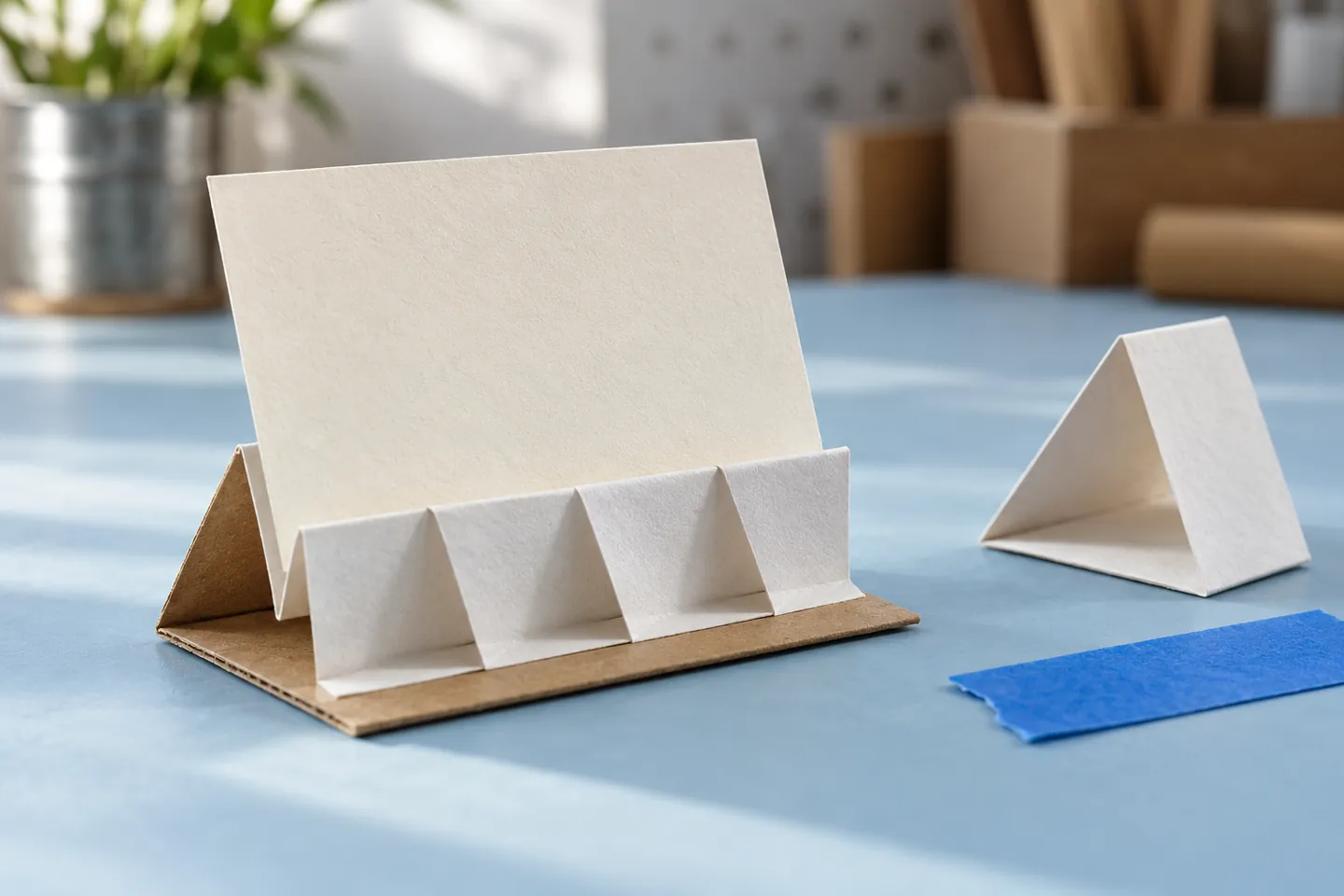
Keep teens in charge of the design challenge
A mentor’s job is to support the thinking, not build the neatest model. Try asking, “What do you notice?” or “Which part would you like to change?” Then leave time for an answer.
If a teen asks for help, check what kind they want. You might hold the base, read a step aloud, or help find a material. Avoid taking the model out of their hands.
Also share roles fairly. A strong folder should not make every choice, and a quiet teen may have an idea to draw. Our team-building guide offers more ways to practice shared leadership.
Let each group decide whether to show its model. A short note or a private check-in can work as well as a group talk.
Share what changed and credit the source
To finish, invite each team to complete three sentences:
- We wanted our stand to help with…
- Our test showed…
- Next, we would change…
Then return to the inventor story. Ask how the person’s work changed the way teens thought about solving a problem. Keep the inventor’s name, specific contribution, and source together.
For example: “We learned about Lewis Latimer’s work on carbon filaments from the National Inventors Hall of Fame.” Do not claim that the team’s paper stand recreates his patented work.
Finally, ask what made the session easier to join. Our youth feedback guide can help you choose one change for next time.
Frequently asked questions
How long should this design challenge take?
Plan about 35 to 45 minutes as a flexible starting point. Leave time for the history, building, two tests, and a short review. Offer breaks and adjust to the group’s pace. Our participation choices guide offers ways to adapt a session.
Did Lewis Latimer invent the light bulb?
No. His important contribution included a method for making a more durable carbon filament. Use the National Inventors Hall of Fame profile to credit that work accurately. Naming a specific improvement helps teens see that invention can build on earlier ideas.
Can we use a different Black inventor's story?
Yes. Choose a reliable source that names the person’s actual contribution. The Smithsonian’s Black inventors resource is a useful place to explore. Then choose a safe paper task inspired by a problem-solving idea, without claiming it copies the original invention.
Take one new idea into the next session
A design challenge can start with a sheet of paper and a good question. Learn the history, let teens choose a plan, and make room to try again. Keep both the inventor’s work and the young people’s ideas in view.
Want to support learning and connection with Cougs 4 Kids? Explore volunteer opportunities and ask about current ways to get involved.
Images are AI-generated illustrations and do not show actual program participants or events.
