

Good Women’s History Month interview questions help teens learn how local women lead. Ask what a guest helped change, who worked with her, and what she learned. First, agree on the purpose of the talk. Then get permission before taking notes, recording, or sharing her words.
This Cougs 4 Kids guide helps teen groups and Washington State University (WSU) student mentors plan a thoughtful chat. Teens choose the questions. Meanwhile, a program-approved adult helps arrange the visit and follows the program’s safety rules.
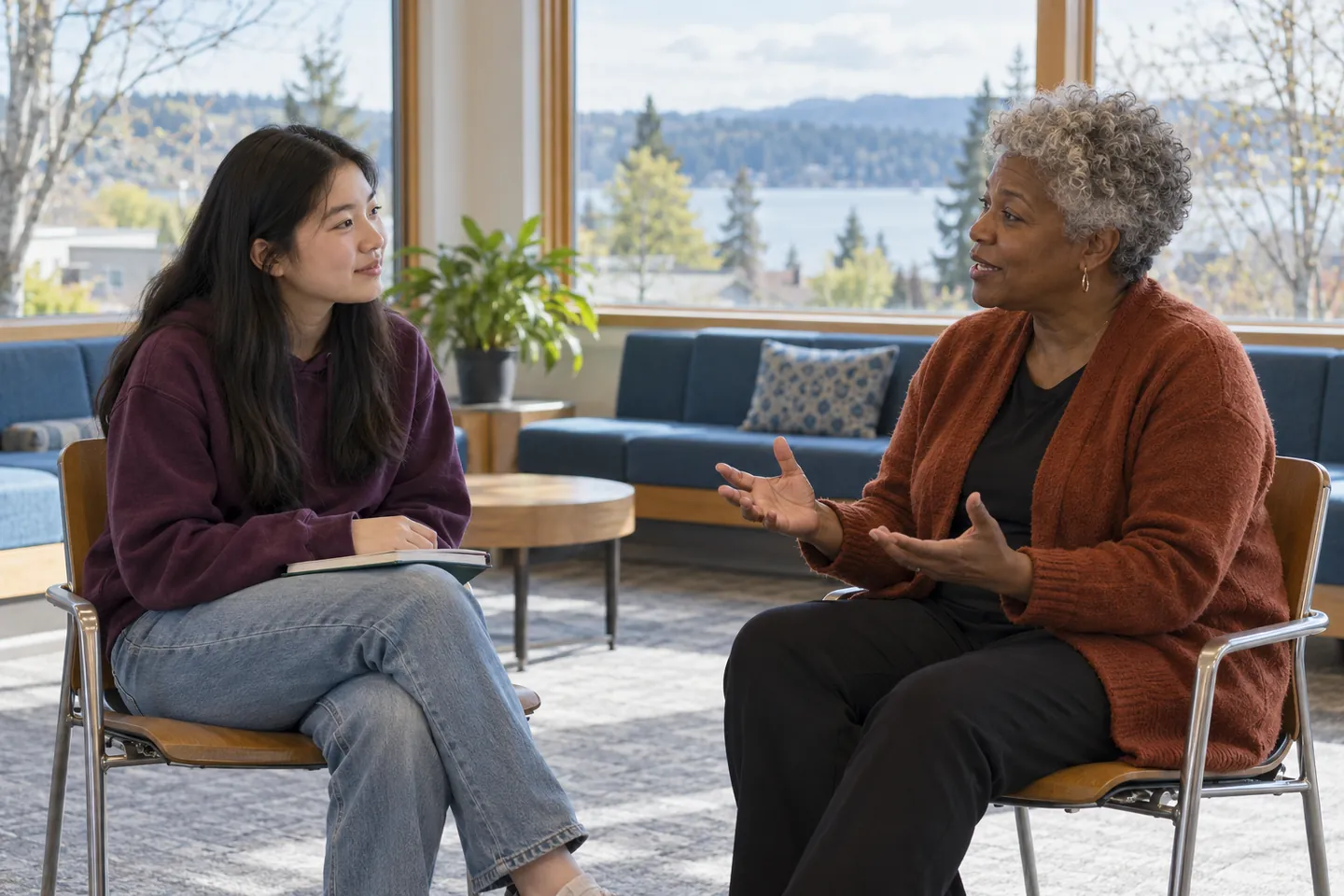
Start with a story close to home
Women’s History Month takes place in March. It honors women’s roles in American history. A local story can help teens see how change grows through everyday choices.
For example, your group could learn from a woman who leads a food pantry or helps care for a park. A library volunteer or neighborhood organizer may also have a story to share. She does not need a famous name or a formal title.
First, ask teens which local issue they want to explore. Then help them find someone whose work connects to it. Our community strengths guide offers ways to notice people and places that help a neighborhood thrive.
Choose a willing guest and make a clear plan
Next, read the guest’s public bio or a trusted local source. Write down her name, role, and one thing you want to learn. However, do not guess private details or ask her to speak for all women.
Have the approved adult send the request through a program-approved channel. Explain who will attend, the topic, the length, and how you hope to use the story. For example, propose a short group chat, then let the guest choose whether it works for her.
Also agree on a place or online format that meets program rules. Ask about access needs, seating, and breaks. Use our activity access guide to plan ways for everyone to take part.
Pick three Women's History Month interview questions
Start with three questions from this list. Then let teens add one of their own. These prompts focus on choices, teamwork, and service:
- What local need first caught your attention?
- What was one small step you took to help?
- Who helped you, and what did you learn from them?
- When a plan did not work, what did you try next?
- How do you find out what people in your community need?
- What is one change you are proud of, and who helped make it happen?
- What could young people do to support work like yours?
- What would you like us to understand that we have not asked?
The Boston Public Library’s interview guide recommends open questions and room to follow the speaker’s story. In other words, ask for an example instead of trying to get a quick yes or no.
For instance, ask, “What helped your team keep going?” Avoid a question that assumes the answer, such as, “Everyone supported your idea, right?”

Practice your Women's History Month interview questions
Before the visit, practice in pairs. One teen asks a question while the other answers about a simple group task. Then switch roles and name one thing that helped each person feel heard.
Next, let teens choose how to join in. One can welcome the guest. Another can ask a question, watch the time, or take approved notes. Teens can also hand a written question to the host or choose to listen.
Keep the choices with the group. Our youth-led project guide explains how adults can support a plan without taking it over.
Listen, pause, and ask one follow-up
During the chat, ask one question at a time. Then leave room for the answer. A quiet pause can give the guest time to think.
If a detail is unclear, ask her to explain it. For example, try, “What did that look like on a normal day?” You can also repeat the main idea in your own words and ask if you understood it.
However, let the guest skip any question. Do not press for painful or private stories. Also avoid asking about people she serves in ways that could reveal their private lives.
Finally, end at the agreed time. Thank her for one specific idea you learned, and explain the next step.

Share your Women's History Month interview with care
A yes to a visit is not a yes to every use of a story. Before recording, explain what you will capture, who can access it, and where you may share it. Then follow the program’s consent process. The Boston Public Library’s consent guidance explains why people need to understand those choices.
Afterward, check names, roles, and quotes with the guest. Also show her the exact words and context you want to share. If you only have rough notes, write a summary instead of placing guessed words inside quote marks.
Keep recordings and notes in the program’s approved storage. Do not post them from a personal account. If you want a photo, use the separate steps in our photo consent checklist.
Turn listening into one small action
After the visit, ask teens what surprised them. Then let each person choose one idea to remember. They can write, draw, speak, or pass.
Next, ask whether the guest named a useful way to help. Check that need with her before making a plan. For example, learning more or sharing an approved story may be a better first step than collecting items no one requested.
Finally, send a thank-you through the approved adult. Name a lesson from the chat and explain how the group hopes to use it. Our teen reflection guide can help the group name what it learned.
Frequently asked questions
What are the best Women's History Month interview questions?
Ask about a real need, a first step, teamwork, and lessons learned. Then add a follow-up based on the guest’s answer. The library’s question-writing tips can help teens keep questions open and avoid leading the speaker.
What if no local guest can join us?
Use a public museum or library story instead. For example, start with the Women’s History Month resource site. Ask teens what the story shows about choices and service. Credit the source, and clearly label your work as research rather than an interview.
Do we have to record the interview?
No. A conversation can be useful without a recording. Ask before taking notes, and agree on any later use. Review the library’s consent guide with the approved adult before you choose a format or plan to share the story.
Bring three questions to your next group meeting
Choose a local role, list possible guests, and pick three questions together. Then ask the approved adult to help with the request. Women’s History Month interview questions can open a thoughtful talk that continues beyond March.
Want to help young people listen, learn, and lead? Explore ways to get involved with Cougs 4 Kids and ask about current opportunities.
Images are AI-generated illustrations and do not show actual program participants or events.
